
How to Store Silicone Craft Beads: 7 Steps to Stay Organized
Table of Contents
- Why Silicone Craft Beads Need Their Own Storage System
- What You'll Need Before You Start Organizing
- Step 1: Sort Your Silicone Craft Beads by Color, Size, and Shape
- Step 2: Choose the Right Silicone Bead Storage Containers
- Step 3: Label and Track Your Bead Inventory
- Step 4: Control Dust, Light, and Humidity Around Your Beads
- Step 5: How to Clean Silicone Beads Before and After Storage
- Step 6: Craft Room Organization Ideas for Small Spaces
- Frequently Asked Questions
Last Updated: September 25, 2026
Why Silicone Craft Beads Need Their Own Storage System
Silicone craft beads are soft, flexible beads made from food-grade silicone, and they need their own storage system because their material attracts dust, holds static, and can discolor when exposed to sunlight for long periods.
Here's the core problem most guides skip: silicone is not glass or acrylic. It grips everything. Lint, pet hair, and fine dust cling to the surface, and once beads sit loose in an open jar, cleaning them becomes a chore. Loose beads also tangle with each other and with any findings stored nearby.
Below, we'll walk through a 7-step system that keeps your silicone craft beads clean, visible, and ready to use.
What You'll Need Before You Start Organizing
Gather your supplies first so you don't stop halfway through. A common mistake is starting to sort before you have containers ready, which leaves beads spread across the table for days.
Here's your checklist:
- Clear plastic bins or bead containers with lids
- A tackle box or compartment tray for small batches
- Adjustable dividers or drawer inserts
- Labels and a marker, or a label maker
- A soft microfiber cloth
- Mild soap and lukewarm water
- A notebook or spreadsheet for inventory
Skip anything made of low-grade plastic that smells strongly.
Step 1: Sort Your Silicone Craft Beads by Color, Size, and Shape
Sorting is the foundation of every good bead storage setup. Start with color, then break each color group down by size, then by shape or texture.
Set up three sorting zones on your work surface:
- Zone 1: color families (reds, blues, neutrals, pastels)
- Zone 2: size groups within each color
- Zone 3: shape and texture (round, faceted, patterned, textured)
Step 2: Choose the Right Silicone Bead Storage Containers
The best silicone bead storage containers are clear, stackable, and dust-proof, but the material they are made from matters more than most guides admit. Silicone is a porous, slightly tacky elastomer that absorbs odors and picks up static, so the wrong plastic can leave your beads smelling like a hardware store or coated in a fine film of dust before you ever open the lid.
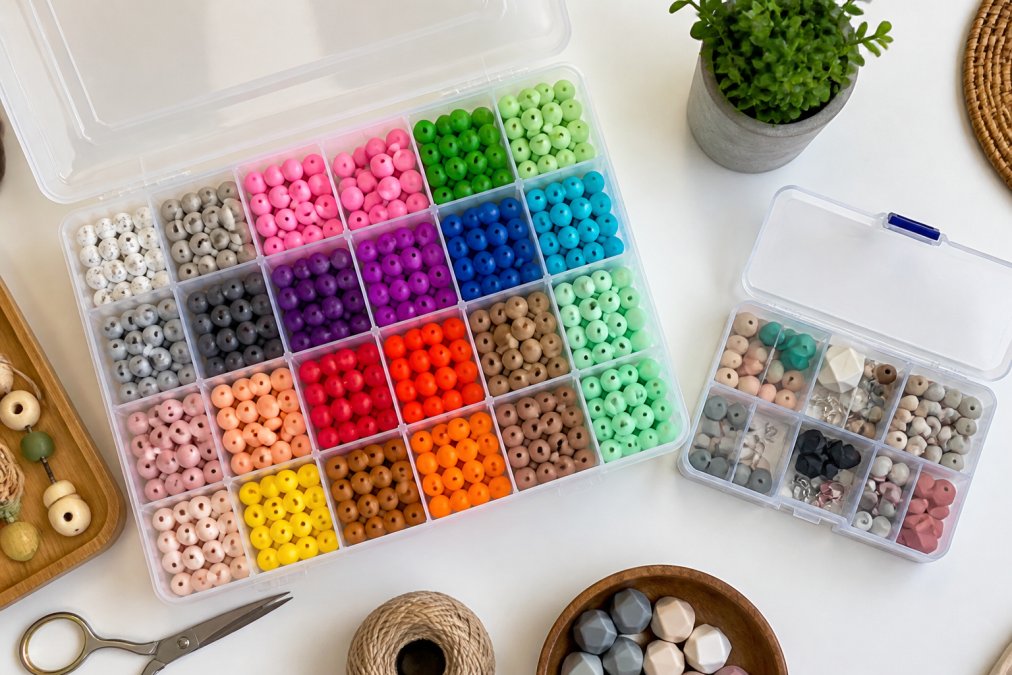
Match the Container Plastic to the Bead
Not all clear plastic is equal. Here is how the common options behave with silicone:
| Container Material | Reaction With Silicone | Verdict |
|---|---|---|
| Polypropylene (PP, recycle code 5) | Low odor, low off-gassing, non-reactive | Best choice for long-term storage |
| Polyethylene (PE, code 2 or 4) | Soft, low odor, good for bulk bins | Good for overflow and bulk |
| Polystyrene (PS, code 6) | Can carry a faint chemical smell when new | Air it out for a week before use |
| PVC (code 3) | Plasticizers can migrate and leave a tacky film | Avoid for direct bead contact |
| Acrylic (PMMA) | Rigid and clear, but brittle and staticky | Fine for display, poor for travel |
Clear Plastic Bins vs. Tackle Boxes vs. Drawer Inserts
Each option fits a different crafter. Here is how they compare:
| Container Type | Best For | Main Drawback |
|---|---|---|
| Clear plastic bins | Bulk storage and large color collections | Takes up shelf space |
| Tackle boxes | Portable sorting and small batches | Limited capacity per box |
| Drawer inserts | Small spaces and desk setups | Not portable |
When to Use Adjustable Dividers and Compartment Trays
Adjustable dividers earn their place when bead sizes vary a lot. Fixed compartments force you to cram large beads or waste space on small ones. Adjustable dividers let you resize each section as your collection changes.
Step 3: Label and Track Your Bead Inventory
A labeling and inventory system saves you from buying duplicates and from hunting for a color you already own. Label every container on the lid and the front, because lids get swapped when you stack bins.
Keep your labels simple:
- Color name or code
- Bead size in millimeters
- Quantity on hand
- Date purchased
Step 4: Control Dust, Light, and Humidity Around Your Beads
Environmental storage conditions matter more for silicone than for most craft supplies, and almost no guide covers them. Silicone is a cross-linked polymer with a slightly open surface that attracts and holds static charge, absorbs ultraviolet light, and can support mildew growth when trapped moisture sits against it for weeks. Each of those failure modes has a different fix.
Dust and Static
Silicone beads build a static charge as they rub against each other and against plastic bins. That charge pulls in lint, pet hair, and fine dust, which then cling to the tacky surface. The fix is not to dust more often, it is to reduce the charge and the exposure.
- Keep a tight lid on anything you are not using this week. A closed container stops airborne dust from reaching the beads at all.
- Avoid rubbing beads with a dry cloth, which builds more static. Use a slightly damp microfiber cloth instead.
- Skip dryer sheets and anti-static sprays. The residue transfers to silicone and is hard to remove.
- Store beads away from carpet, where pet hair and fibers are most concentrated.
Light and UV
Silicone itself is fairly UV-stable, but the pigments used to color craft beads are not. Direct sunlight fades bright colors over months, and the effect is cumulative, a bead that sits on a sunny shelf for a year may look noticeably duller than the same bead kept in a drawer. Keep containers in a closed cabinet or on a shelf out of direct sun.
Humidity and Temperature
Silicone is not damaged by normal indoor humidity, but two conditions cause problems:
- High humidity (above roughly 60% relative humidity) encourages mildew on any dust or skin oils left on the beads. Basements, garages, and laundry rooms are the usual culprits.
- High heat (above about 90°F for extended periods) can soften thin beads and cause them to deform under the weight of beads stacked above them.
A Monthly Check That Takes Two Minutes
Once a month, open each container and look for three things: a fine dust film on the beads, a faint musty smell, or any bead that feels tacky rather than smooth. Dust means the lid is not sealing. Musty smell means moisture got in. Tackiness usually means the bead absorbed oil or plasticizer from a nearby container. Catching any of these early means a quick clean instead of a ruined batch.
Step 5: How to Clean Silicone Beads Before and After Storage
Cleaning silicone beads is simple, but the method matters. Harsh cleaners break down the surface over time, and hot water can warp thin beads.
Follow these steps:
- Fill a bowl with lukewarm water and a drop of mild soap.
- Add beads and swish gently for 30 seconds.
- Rinse under cool running water.
- Spread on a microfiber cloth and pat dry.
- Let beads air dry fully before sealing them in containers.
Step 6: Craft Room Organization Ideas for Small Spaces
Small craft rooms need vertical storage and portable options. If your workspace doubles as a dining table, everything has to pack away fast.
Try these space-saving organization hacks:
- Mount shallow shelves above your desk for stackable bins
- Use a rolling cart so your bead trays move with you
- Hang a shoe organizer on a door for portable bead containers
- Slide drawer inserts under a bed or sofa for bulk storage
Frequently Asked Questions
What is the best container for storing silicone beads?
Clear plastic bins with adjustable dividers work best for silicone craft beads. They let you see what you have without opening every container, and the compartments keep beads from rolling into each other. For smaller collections, a tackle box or bead tray with snap lids offers the same visibility in a portable format. Avoid cardboard boxes, which absorb moisture and shed fibers onto the silicone surface.
Do silicone beads need to be stored in a specific environment?
Silicone beads hold up best away from direct sunlight, which can fade colors over time, and out of humid areas like basements or laundry rooms. A closed container in a climate-controlled room keeps them dust-free and static-free. If you live in a humid region, add a small silica gel packet to bulk storage bins to absorb excess moisture.
How do you keep silicone beads from getting dusty or sticking together?
Store beads in dust-proof containers with tight-fitting lids, and avoid overfilling compartments so beads are not pressed against each other. A light dusting with a lint-free cloth before closing the lid helps. If beads do stick, separate them gently and wipe with a damp cloth, then let them air dry completely before returning them to storage.
Can you store silicone beads with other craft supplies?
You can, but keep them in their own compartments or bins. Silicone attracts dust and lint, and mixing loose beads with glitter, paper scraps, or metal findings leads to cross-contamination. Dedicated silicone bead storage containers also make inventory easier to track, since you can count and sort by color without digging through unrelated supplies.